August 2026: Welcome Back. Role-Play That Holds Its Own, and Speech Quality You Can See
The sand is out of the laptop, the out of office is off, and September arrives with a queue of open roles and a wave of candidates who spent their holiday deciding it was time for a change.
We did not take the month off. Two areas got real work: role-play simulations, and the speech and setup side of every interview.
Role-play simulations, hardened
Role-play arrived in July. In August we put it under pressure and fixed what broke.
Build your own. A new My Simulations area lets you create a custom role-play with your own scenario, character and objective, and run it as often as you need, right beside the catalogue sessions.
Characters that push back. Personas now run with an explicit difficulty level, defaulting to the harder setting, with a cool-off rule so a tough character does not escalate forever.
Sessions that end when they should. A persona has no question list to bound it, so a character that stopped making progress used to talk in circles until the clock ran out. Personas are now told that no time passes between turns, and a stall guard closes a session once the character has made the same point three turns running.
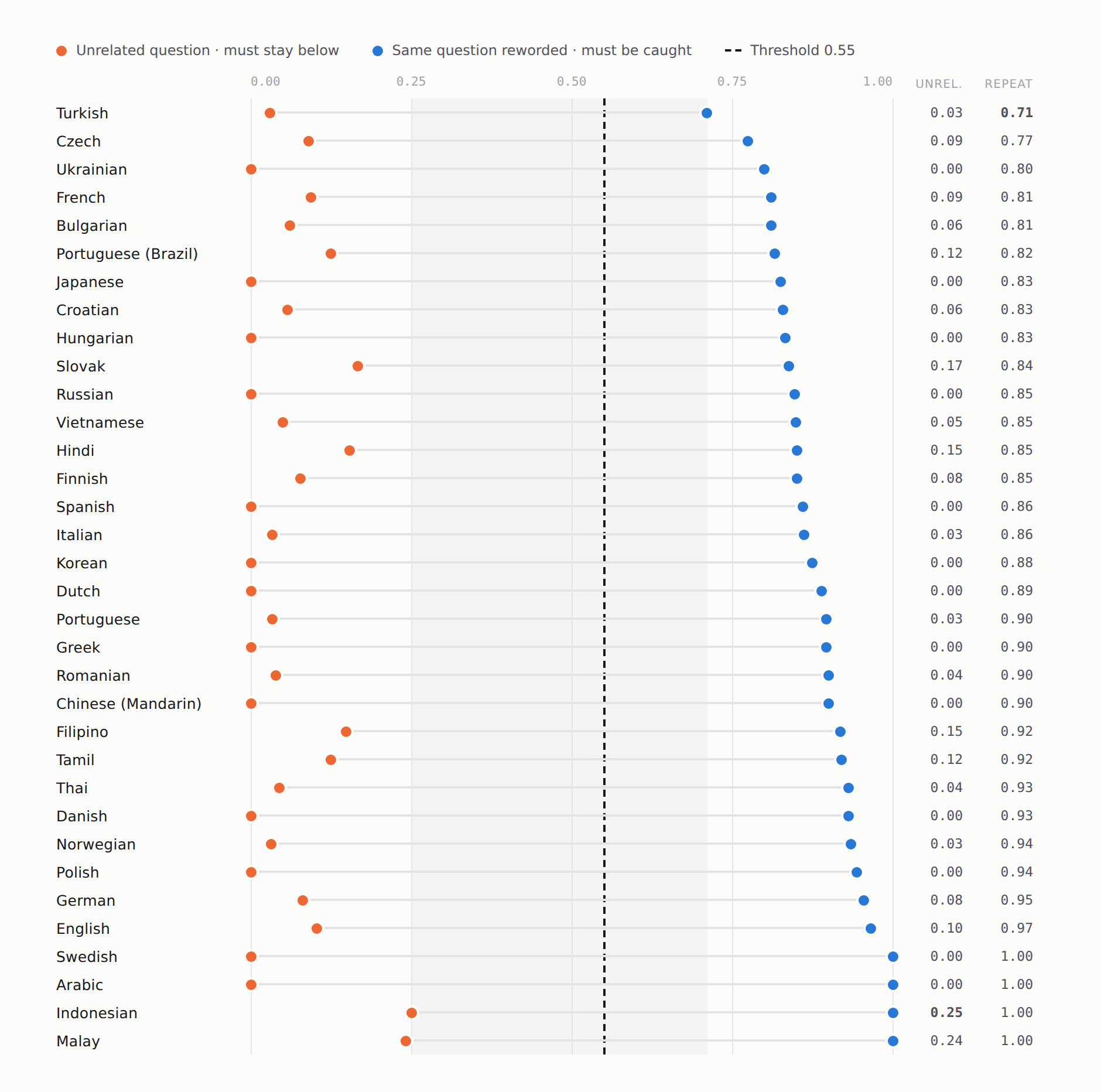
Repetition detection in all 34 languages. The old check compared word overlap against an English stopword list, which does nothing for Slovak and nothing at all for Japanese, Chinese or Thai. It now uses character trigrams, calibrated against real turns in every platform language.
Tested against the real models. A new harness replays 36 scripted conversations through the real prompts, handlers and parsers on all three production models, graded across ten quality rubrics by an independent model. Two rounds of fixes took failing turns from 25 down to 12, and the prompts got shorter in the process.
Speech and setup quality, visible end to end
Poor audio has always been the quietest cause of a weak interview. Now both sides can see it.
An interactive mic and camera check. The pre-interview test is a short spoken exchange rather than a level meter. It comes back with a verdict, passed, passed with suggestions, or not passed, and names what to fix: microphone level low, noisy environment, hard to transcribe, camera framing.
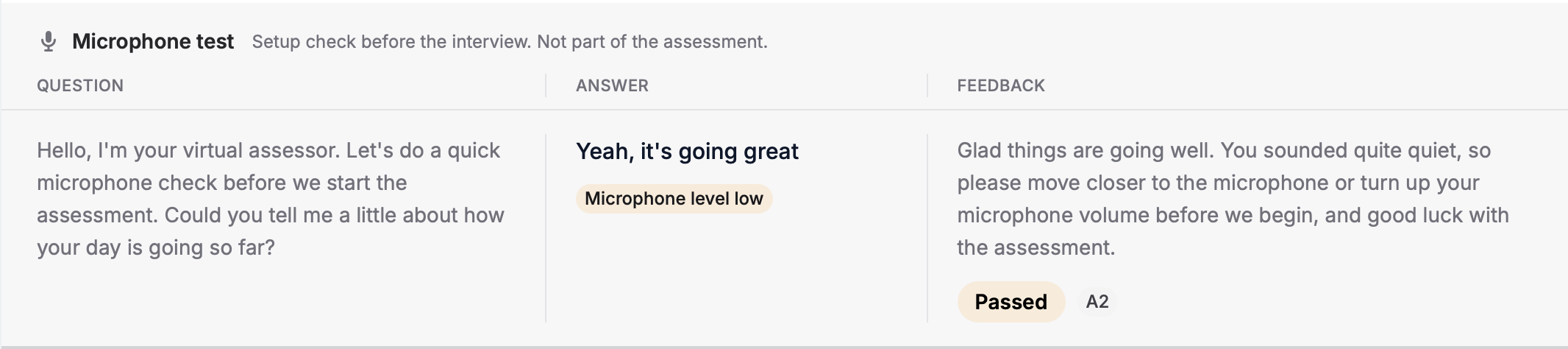
The setup check appears in the result. Shown per attempt and clearly labelled as not part of the assessment, so a recruiter reading a weak answer can see whether the room was the problem.
Speech KPIs on the result page. Accuracy, fluency, cadence and recognition confidence, plus an overall score and the specific questions where audio was flagged.
Steadier live sessions. Barge-in now needs two words and filters background audio, so a cough no longer cuts the interviewer off. Local recordings survive a reconnect, a full session preview is generated for review, and proctoring raises a risk when the camera was never published instead of silently recording nothing.
Also shipped in August
Resume and career tools. Rebuilt resume builder and resume check, import an existing resume inside the builder, cover letters written in the language you choose, new templates, and export to Word and PDF.
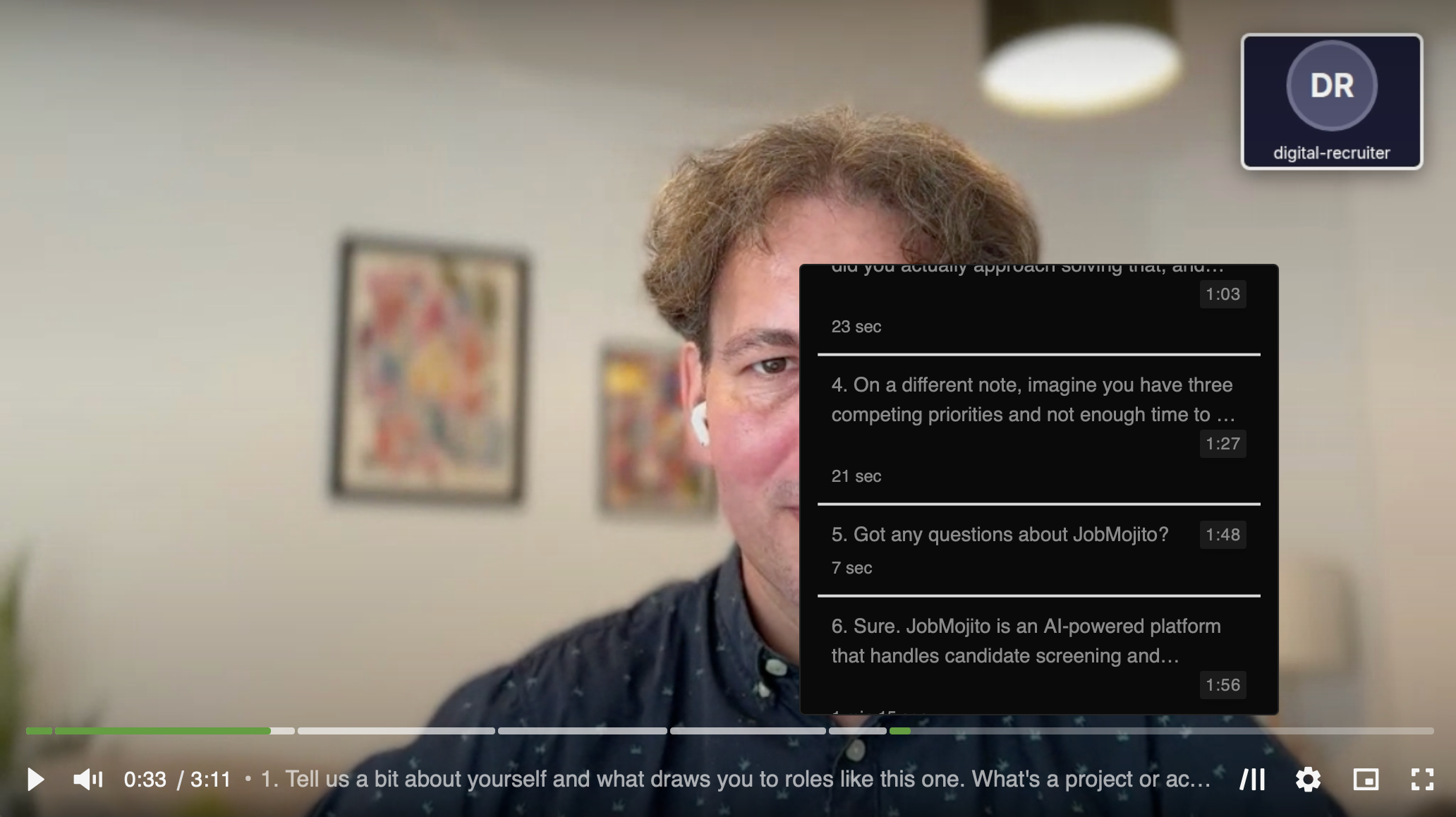
Interviews and results. New player with chapters and aligned transcripts, pre-screening feedback for candidates, a pending decision state, consolidated statuses and filters, paginated job listings, simpler modal wording.
Catalogue and coaching. Multi-catalogue support, direct top-up of coaching credits, a redesigned jobinterview.coach, and a public avatar that now works offline.
API and MCP. New endpoints to maintain the catalogue and update or retrieve an interview, question level updates, persona generation, interactive start, and MCP server 1.1.2 published to the registry.
Languages and emails. More platform languages, Spanish coaching, and rebuilt invitation, reminder and marketing email templates.
Under the hood. Migration to GPT-5.6, PostHog tracing and error reporting across every service, faster page rendering, and a support page carrying your own company details.
Something you would like to see next? Reply on the feedback board and we will pick it up.